Lugano
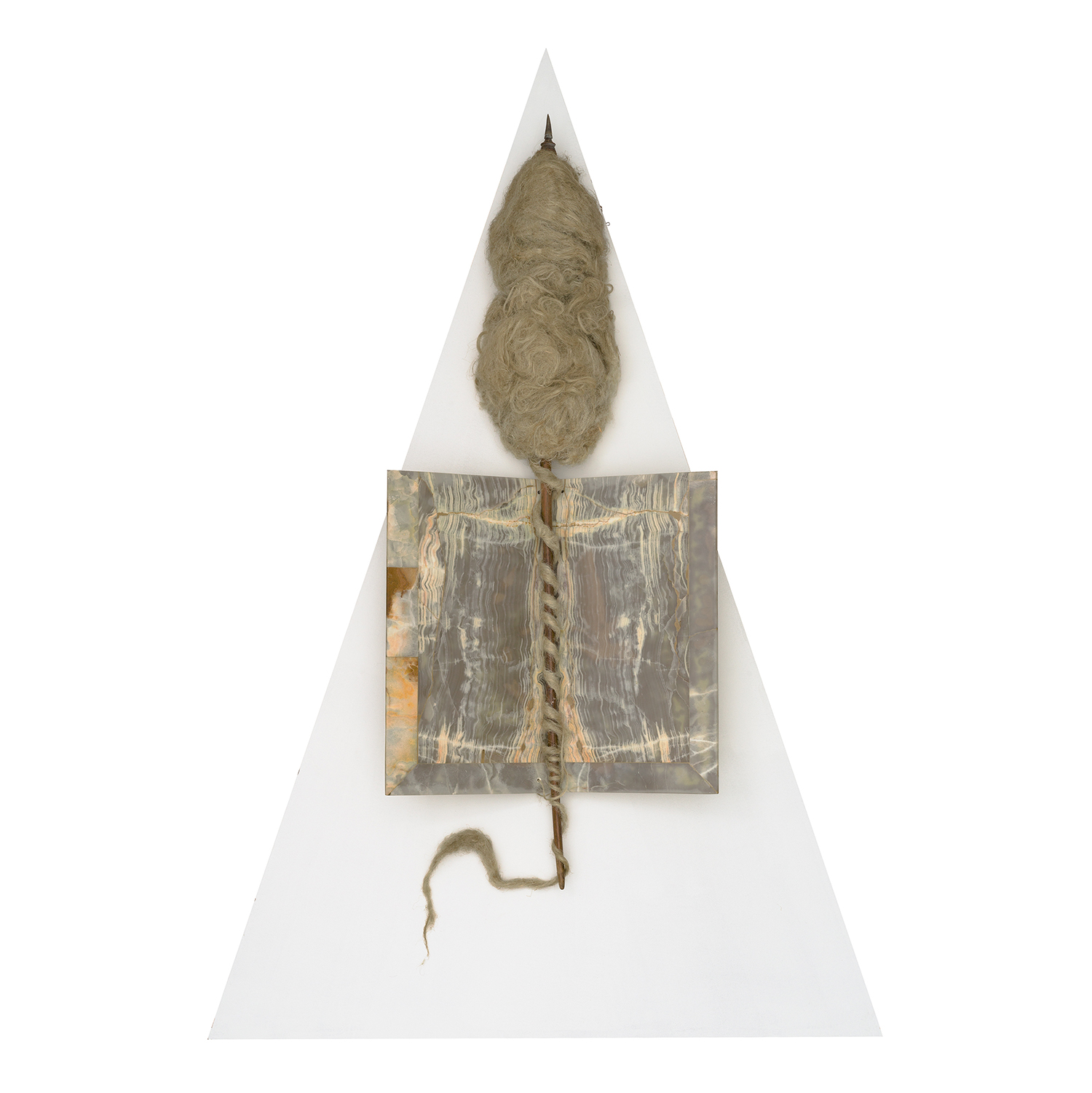
La bella addormentata (il filo murato)
1988
Wood, marble and wool
100 x 50 x 16 cm
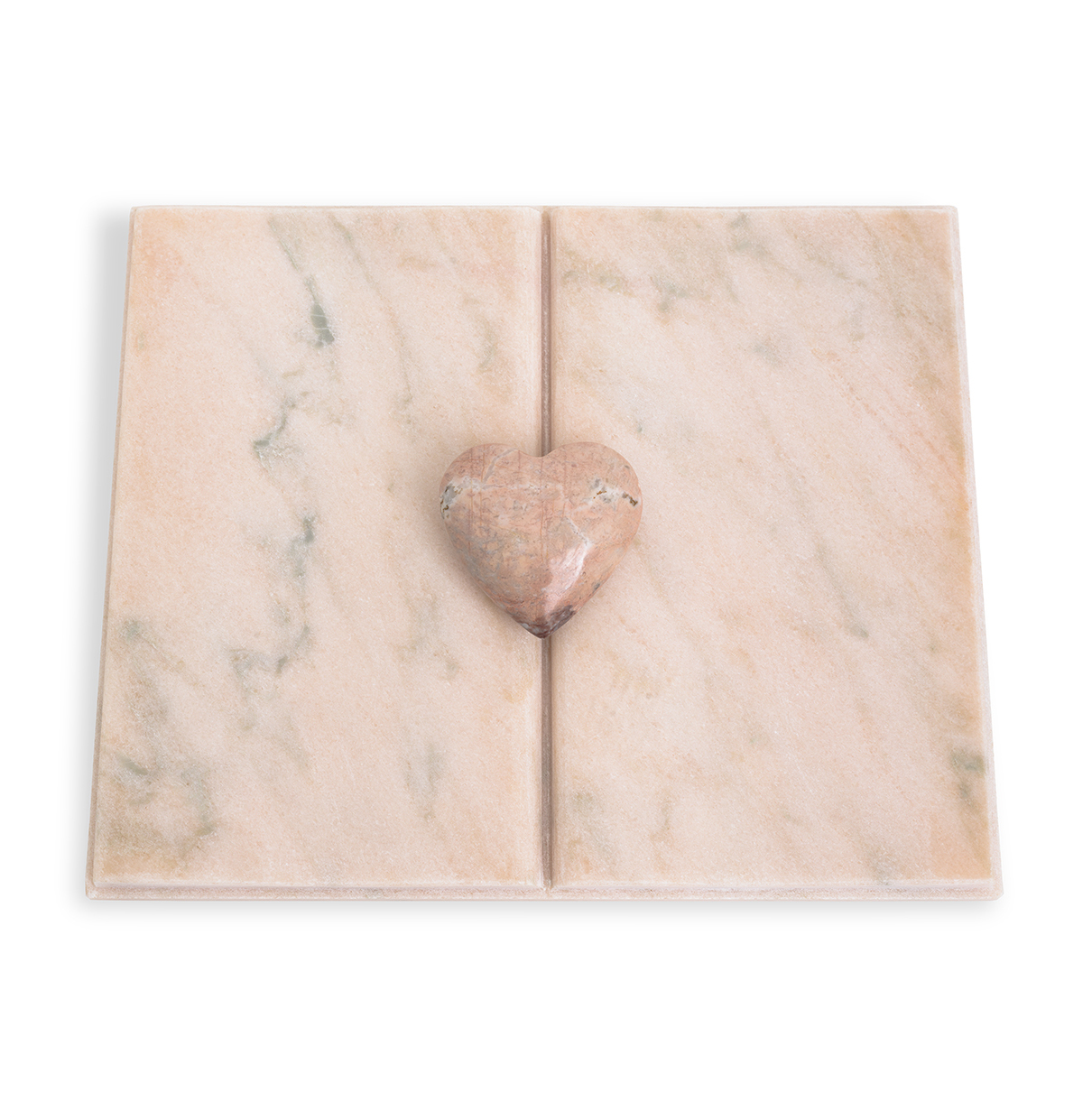
Untitled
1996
Pink marble
2.5 x 32 x 25 cm
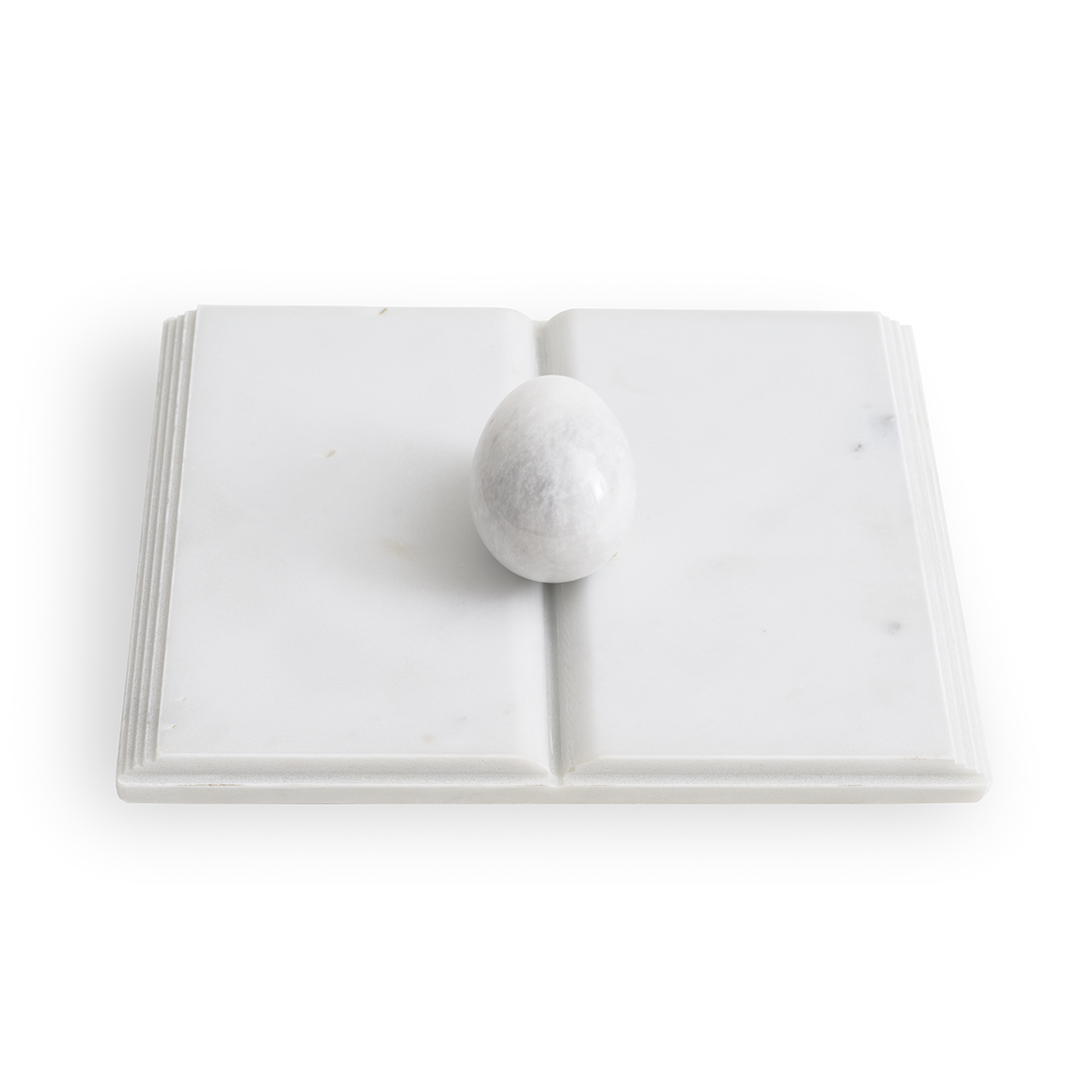
Untitled
1980
Marble
2.1 x 25.8 x 20.1 cm
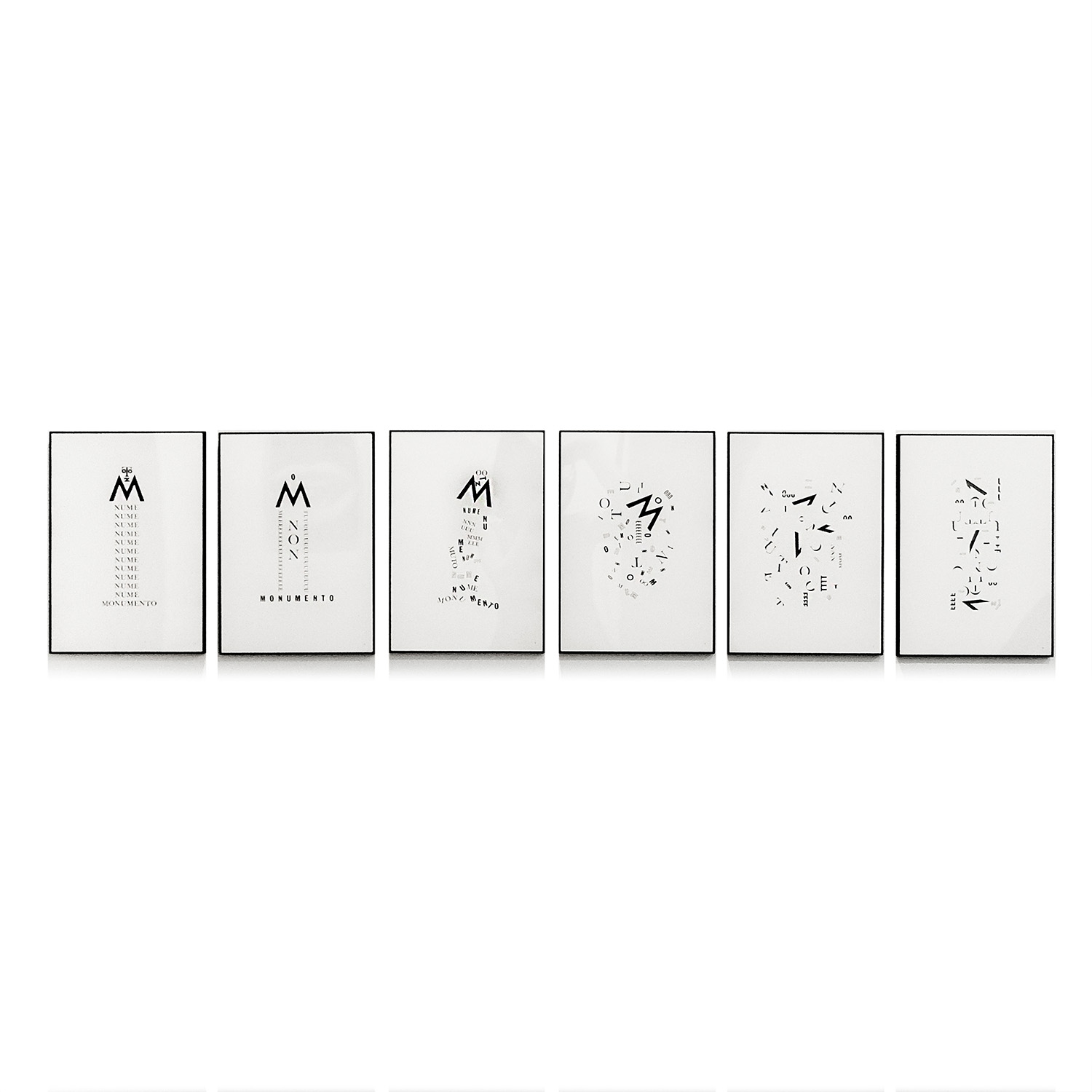
Storia del monumento, 1968
Folder with 6 pages, typographic print on paper
35 x 24 cm each
Mirella Bentivoglio, née Bertarelli, was born on March 28, 1922, in Klagenfurt, Austria, to Italian parents: her mother Margherita Cavalli and her father Ernesto Bertarelli, a scientist and bibliophile. Raised in Milan surrounded by books, she grew up in a multilingual environment between German-speaking Switzerland and England, where she earned Proficiency in English diplomas from the universities of Sheffield and Cambridge. Her first contact with the art world came through her family: her cousin, the painter Maria Teresa Cavalli, and her husband Renato Vernizzi, a member of the Lombard “Chiarismo” movement, for whose gallery she worked organising events, and whose colours shaped her early figurative paintings. At the same time she wrote poetry in Italian and English: her first collection, Giardino (Garden), published by Scheiwiller in 1943, opened the doors of literary circles to her, with reviews by Giorgio Caproni and Mario Praz, but the war years led to an expressive crisis that kept her away from writing and painting for a time.
In 1949 she married Ludovico Matteo Bentivoglio, a professor of international law, and took his surname by choice, partly for its auspicious meaning (“I wish you well”). In the late 1950s a grant took her to the Salzburg Seminar for American Studies, where she chose to study Ben Shahn, a painter who often used words in his pictures and who had struck her at the 1954 Venice Biennale: the result was a friendship and a monograph, published by De Luca in 1963 and shortlisted for the Viareggio Prize. Motherhood was also decisive: watching her three daughters draw, she discovered a language without syntax but rich in images, and she would say that it was the children who showed her the way.
The turning point came in the mid-1960s, when her husband showed her a newspaper article on the Brazilian concrete poetry of the brothers Augusto and Haroldo de Campos: for her, as she later recalled, it was “like digging a hole and striking oil”. From then on, the word became visual material. Starting from concrete and visual poetry, she broke letters and words apart to reveal hidden meanings: in Gabbia (Cage, 1966) a grid of “H”s imprisons the Italian word “HO” (“I have”), and only the red “O” offers a way out; in the portfolio Storia del monumento (History of the Monument, 1968), made with Annalisa Alloatti, the word “monumento” collapses page after page into fragments such as “nume” (deity), “me non tu” (me not you), “muto” (mute) and “temo” (I fear).
In 1967 she took part in her first group show, Poesia Concreta, curated by Adriano Spatola and Franco Verdi at the Club Turati in Milan; in 1968 she published the collection Calendario (Calendar) with Vallecchi and qualified to teach Aesthetics and Art History at Italian academies; in 1969 she exhibited at the Venice Biennale for the first time, in the concrete poetry show at Ca’ Giustinian. Works followed that combine wordplay and protest: Ti amo (I Love You, 1970), in which the syllable “AM” opens inside a wide-open female mouth that both loves and devours; Fiore nero (Black Flower, 1971), her first known visual poem, a flower made from newspaper cuttings about the funeral of a young African American killed by the police; and Il cuore della consumatrice ubbidiente (The Heart of the Obedient Consumer, 1975), in which the two “C”s of Coca-Cola form a heart enclosing the word “oca” (Italian for “goose”, slang for a silly woman). In 1971 she held her first solo exhibition at the Galleria Schwarz in Milan, followed in 1973 by a show at the Galleria Pictogramma in Rome presented by Gillo Dorfles.
The book is the common thread of her entire practice. In 1966, after the Florence flood, she volunteered at the National Library to rescue water-damaged manuscripts: the experience revealed the fragility of paper and sparked the desire to make books from durable materials. After the cut-card book Punto ambiguo (Ambiguous Point, 1972), she made her first open book in stone, Poema totale (Total Poem, 1974), with an egg resting at its centre: from then on, the book and the egg became the two key symbols of her poetics. Marble books followed, often engraved or screen-printed, as did woven textile books in the 1980s and, in the 1990s, the Litolattine, books whose pages are crushed cans collected from the street. In 1990 she coined the term “librismo” (bookism) for artists working with the concept and form of the book. She herself rejected the label of sculptor: “I am considered, mistakenly, a sculptor, albeit an atypical one; in reality my work takes place, today as yesterday, in an entirely ‘poetic’ sphere.”
In 1976, invited by Enrico Crispolti to the Gubbio Biennial, she created her most famous public work: an egg 2.30 metres high and weighing about two tonnes, built from palm-sized stones from a local quarry, like those once used for stoning. Its original title, All’adultera lapidata (To the Stoned Adulteress), is carved on a stone facing inwards, where it cannot be seen. “My Egg is a symbol of life built with instruments of death,” the artist explained. Placed outside the Porta Sant’Ubaldo, along the route of the Corsa dei Ceri festival, it is considered Italy’s first feminist public sculpture; after collapsing in a road accident, it was restored by the town as part of its identity, and locals simply call it “Ovo”. The Ovo was followed by other monumental works in stone, such as Da “H” a “E” (From “H” to “E”), in which three travertine blocks turn the silent letter H into the conjunction E, and Hyper Ovum (1987).
She returned to Gubbio with the performances Lettura come poesia (Reading as Poetry, 1979) and E = congiunzione (E = Conjunction, 1981) and with interventions in the Umbrian hypogea (1982–85); she brought phonetic poetry to Savona, to theatres in Alessandria and Rome, to the Centre Pompidou and to Los Angeles. Her symbolic structures found homes in very different settings: the countryside of Bassano in Teverina, where in 1998 her Libro-campo (Field Book) traced an open book in furrows of earth destined to disappear; Piazza Augusto Imperatore in Rome (2001); the park of Villa Buttafava in Lombardy; the banks of the Vltava in Prague (2005); and the churchyard of the Quaroni church in Matera (2007).
Alongside her work as an artist, Bentivoglio was a decisive curator for the history of twentieth-century women artists. She began in the late 1960s through her partnership with Ugo Carrega, and in January 1972, at the Centro Tool in Milan, she curated the Esposizione Internazionale di Operatrici Visuali (International Exhibition of Women Visual Operators), the first in a series of exhibitions devoted entirely to women artists, which in the following years travelled to Savona, Rome and Turin, and continued in 1976 with Tra linguaggio e immagine (Between Language and Image) at the Galleria Il Canale in Venice. That same year she curated an exhibition at the Italian Cultural Institute in Tokyo for the centenary of Marinetti’s birth.
In 1978 the president of the Venice Biennale, Carlo Ripa di Meana, entrusted her with a section at the Magazzini del Sale alle Zattere. The result was Materializzazione del linguaggio (Materialisation of Language): a title whose root “mater” joins femininity and matter, and an exhibition bringing together eighty women artists, from the Russian avant-garde of Olga Rozanova and Natalia Goncharova to Sonia Delaunay and contemporaries such as Ketty La Rocca, Irma Blank, Elisabetta Gut and Maria Lai, with whom Bentivoglio collaborated on Libro A. It was the only show at that Biennale to include artists from Eastern Europe: to get around the boycott by the communist governments, Bentivoglio had the works sent directly to her by the artists themselves. From 20 to 23 September the exhibition came alive with performances of phonetic poetry and gestural writing. In 2022 Cecilia Alemani’s Biennale, The Milk of Dreams, republished the 1978 catalogue.
In the following years her exhibitions travelled the world: from Columbia University in New York (From Page to Space, 1979) to Barcelona (Fil-sophia, 1982) and Senigallia (Volùmina, 1988), from Medellín to Recife, from the Perth Festival in Australia to the Centro Pecci in Prato and the Palazzo delle Esposizioni in Rome, and she also collaborated with MoMA. The works she gathered as a curator, later donated, now enrich the collections of MART in Rovereto, the Centro Pecci, MA*GA in Gallarate and MACMa in Matino.
She was also one of the most active theorists of visual writing. At Giulio Carlo Argan’s invitation she wrote the essay “Visual Poetry” for the 1978 supplement to the Enciclopedia Universale dell’Arte; in 1997 a grant from the Getty Research Institute allowed her to study the Futurist archives, research that led to a volume published in New York that same year and, in 2008, to Le futuriste italiane nelle arti visive (Italian Futurist Women in the Visual Arts), written with Franca Zoccoli for De Luca. She taught and lectured worldwide, from the University of Freiburg to Oxford, from Ca’ Foscari in Venice to universities in Tokyo and Osaka and the FAAP in São Paulo.
Her solo exhibitions, presented by critics such as Enrico Crispolti and Gillo Dorfles, were held across Italy, Europe, the United States, Brazil and Japan, with anthological shows at the Palazzo delle Esposizioni in Rome (1996), the National Museum of Women in the Arts in Washington (1999), Pomona College in Claremont, California (2003 and 2015), and the Oculus Gallery in Tokyo (2010). She exhibited nine times at the Venice Biennale between 1969 and 2009, three times at the São Paulo Biennial between 1973 and 1994 and three times at the Centre Pompidou between 1978 and 1982, as well as at documenta 7 in Kassel (1982), the 11th Rome Quadriennale (1986), MoMA in New York (1992), Palazzo Pitti in Florence (2001) and Expo Milano (2015). Her works are held by institutions including MoMA, the Getty Research Institute in Los Angeles, the National Museum of Women in the Arts, MART, MACRO, Ca’ Pesaro in Venice, MUSMA in Matera, the MAC in São Paulo, the Sackner Archive in Miami and the Uffizi. In 2011 she donated her extensive collection-archive of women’s art to MART.
Mirella Bentivoglio died in Rome in March 2017. Her daughters Marina, Leonetta and Ilaria donated her books and archival materials to the National Central Library of Rome, which in 2019 dedicated a permanent space to her within its Spazi900 itinerary, alongside those devoted to Pier Paolo Pasolini, Elsa Morante and Italo Calvino. The Archivio Mirella Bentivoglio was founded the same year. In 2022, for the centenary of her birth, the Fondazione Antonio Dalle Nogare in Bolzano revisited the spirit of the 1978 exhibition with Ri-Materializzazione del linguaggio.
Repetto Gallery has presented Mirella Bentivoglio’s work in several group exhibitions, from Alphabet – The Perfect Revolution (2020–2021), Earth Art (2021) and Il canto della terra (2025). The works available include some of her celebrated stone books and tablets : For information on available original works by Mirella Bentivoglio, contact the gallery.