Lugano
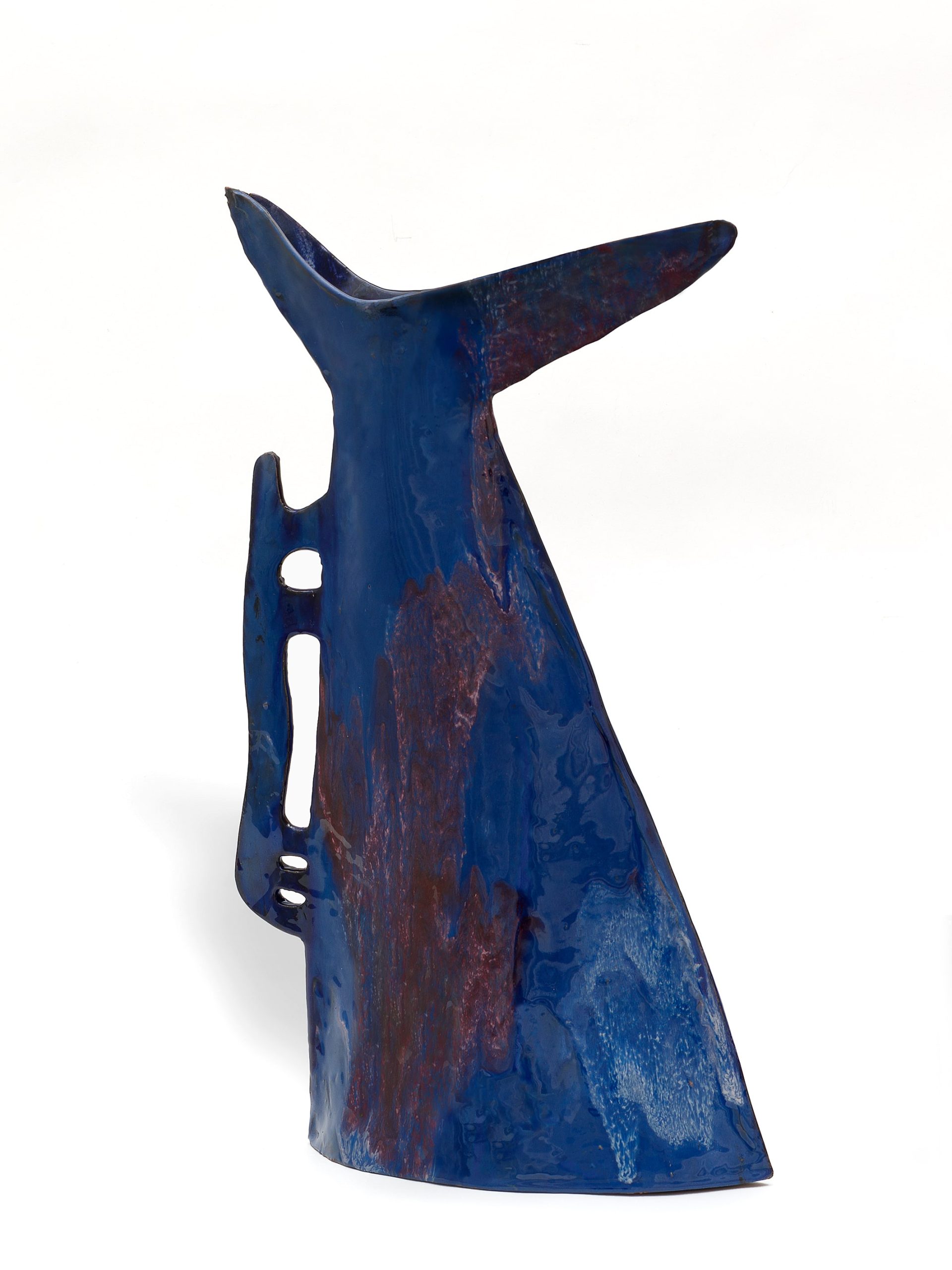
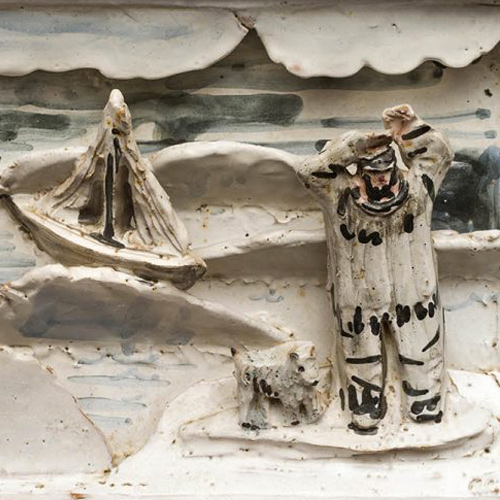
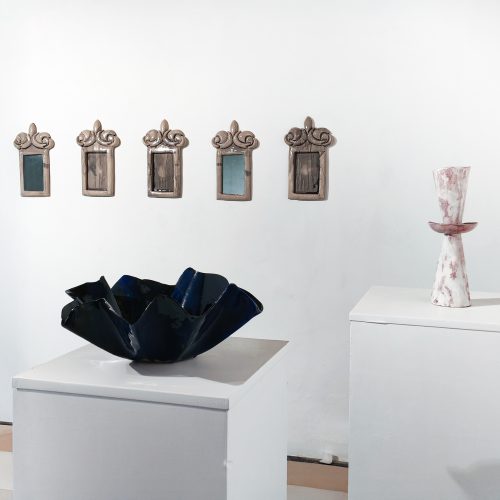
Brocca piatta
1958 ca.
polychrome glazed ceramic
48,4 x 28,6 x 12,1 cm
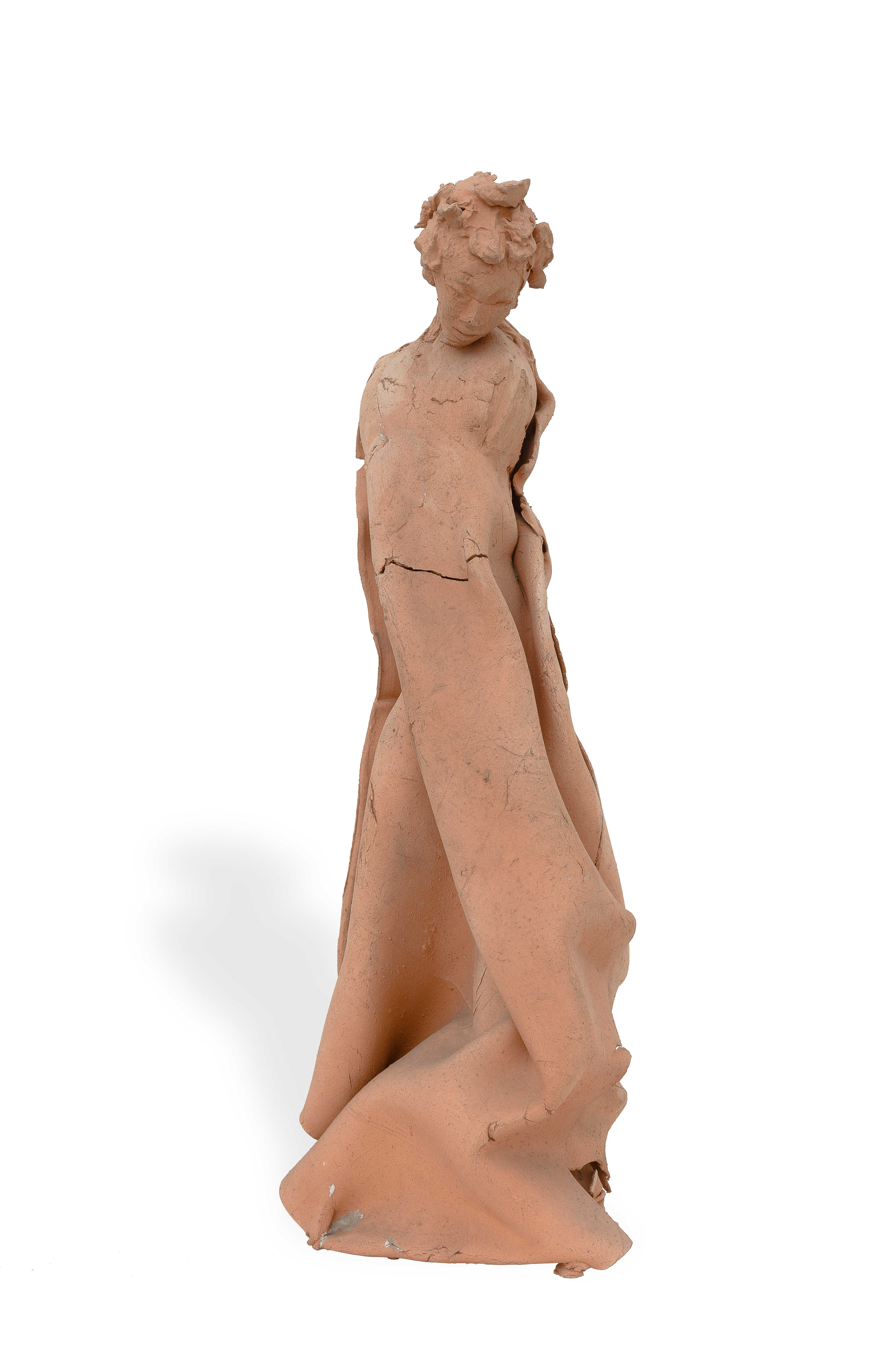
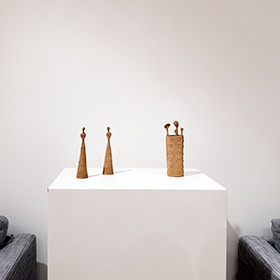
Untitled
1945 ca.
terracotta
H 24 cm
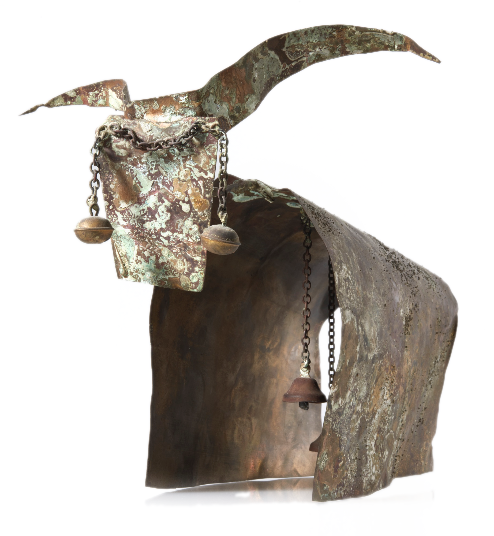
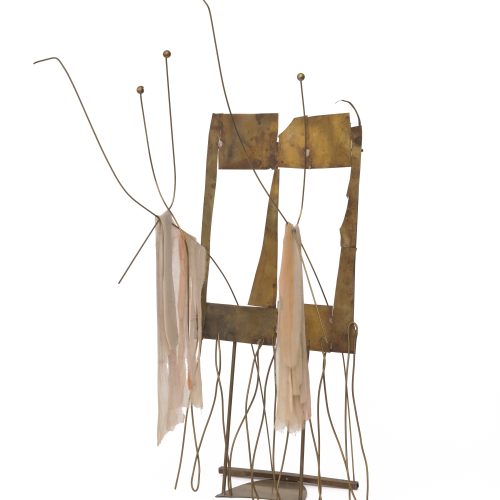
Il Toro
1964
brass
19 x 32 x 19 cm
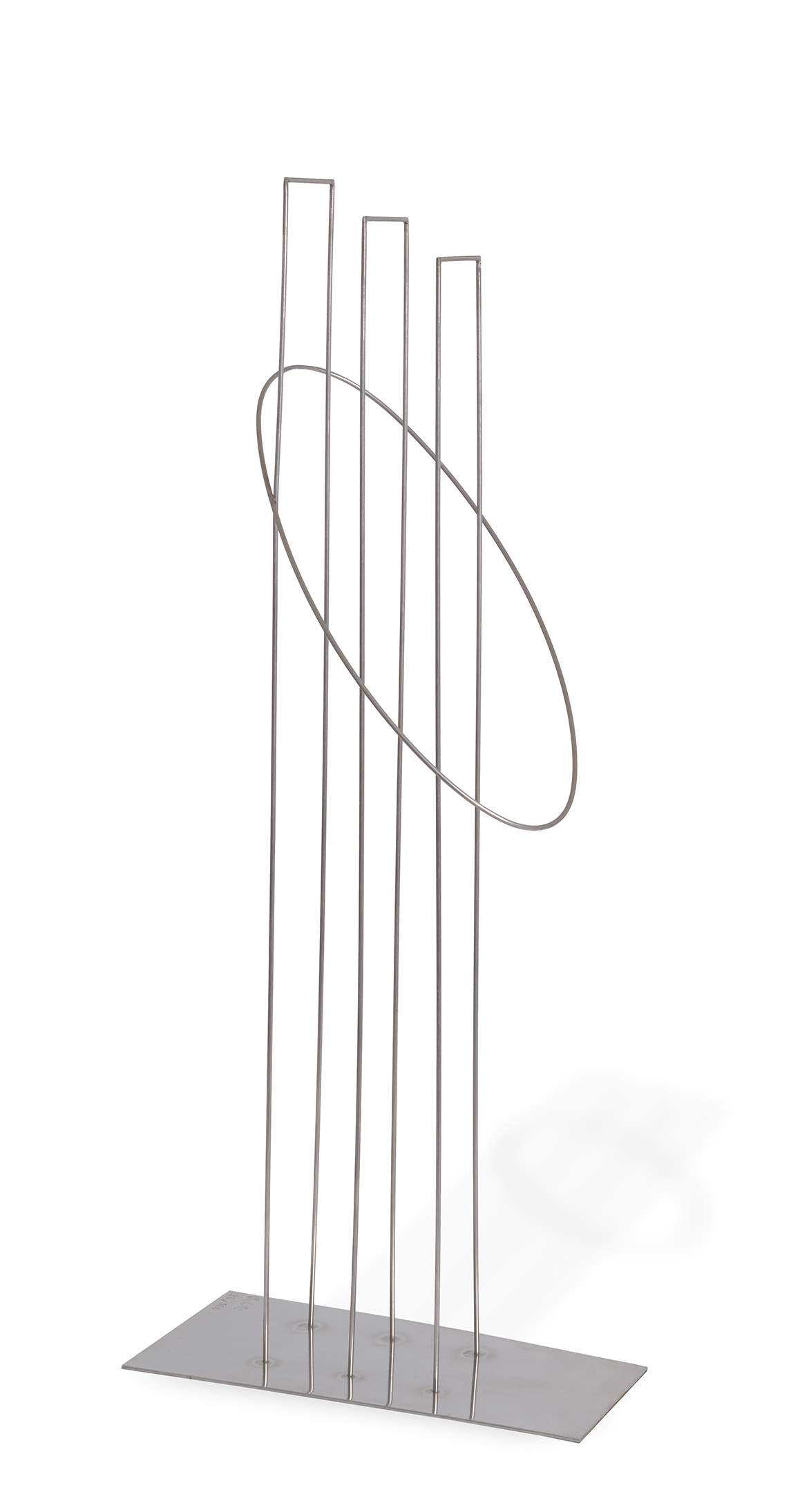
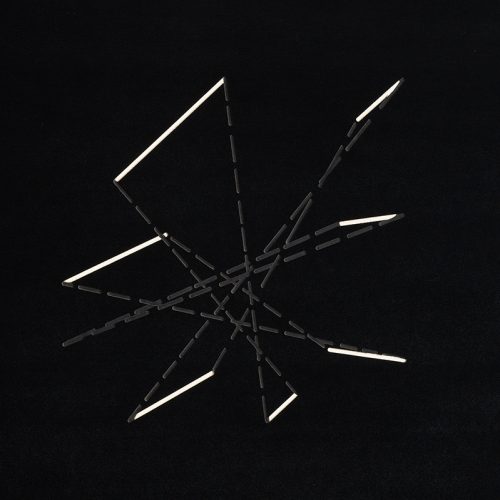
Eclisse seconda
1974
stainless steel
44 x 18 x 12 cm
edition of 100 + 20 AP
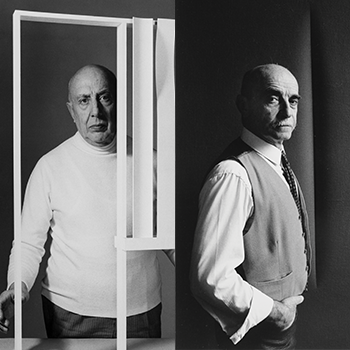
Fausto Melotti (Rovereto, 1901 – Milan, 1986) was one of the most original Italian artists of the twentieth century: sculptor, ceramist, painter and poet. Trained as an engineer and a pianist, he translated musical counterpoint and mathematical proportion into sculpture, from the abstract works of the 1930s to the light brass and steel sculptures of his maturity. A lifelong friend of Lucio Fontana, he was also one of the great Italian ceramists of the postwar years and a key figure in the dialogue between art, architecture and design. In 1986 the Venice Biennale awarded him a posthumous Golden Lion.
Fausto Melotti is one of the historical artists of Repetto Gallery. The gallery has presented his work in exhibitions including Fontana – Garelli – Leoncillo – Melotti. Ceramics 1946–1968 (2014), Italian Ceramics (2020) and κένωσις – Lucio Fontana and Fausto Melotti, which inaugurated its Lugano space in 2022, and supported the 2014 exhibition devoted to the artist at the Peggy Guggenheim Collection in Venice.
Fausto Melotti was born on 8 June in Rovereto, in Trentino, then part of the Austro-Hungarian Empire. At the beginning of the twentieth century the town was a lively cultural centre, the birthplace of the Futurist painter Fortunato Depero, the philosopher Antonio Rosmini, the archaeologist Paolo Orsi and the architects Luciano Baldessari, Gino Pollini and Adalberto Libera. Melotti was deeply shaped by this environment and by his family, in which music played a central role. He trained as a pianist and shared his passion for music with his cousin Carlo Belli, later one of the leading theorists of abstract art, and with Gino Pollini, who would marry his sister Renata.
At the outbreak of the First World War, the family moved to Florence, where Melotti completed secondary school.
He enrolled in Physics and Mathematics at the University of Pisa, but soon moved to Milan to study engineering at the Politecnico. After the war, Trentino became part of Italy. Alongside his studies he explored art and architecture, while music remained central to his life. In 1924 he graduated in electrical engineering. He kept close ties with Rovereto and with Pollini, his fellow student at the Politecnico, and Belli: together they followed Depero’s Futurist research, frequented his Casa d’Arte Futurista and shared a passion for Stravinsky.
In Turin he worked with his uncle, assistant to the sculptor Pietro Canonica, from whom he learned the craft of sculpture. Moving away from Depero’s Futurism, he began making small sculpted figures. He remained close to Gruppo 7, the Milan-based association of rationalist architects whose members included Gino Pollini, Giuseppe Terragni, Luigi Figini and Adalberto Libera, and whose ideas offered an alternative to the Novecento style that dominated Italy during the Fascist period.
He enrolled at the Accademia di Belle Arti di Brera in Milan, where he met Lucio Fontana. Both students of the sculptor Adolfo Wildt (1868–1931), they became friends and began a lifelong artistic dialogue.
He contributed to the design of the Craja Bar in Milan, one of the most important examples of Italian rationalist architecture and interior design, for which he created a nickel-plated iron fountain. In the early 1930s he made his first Teatrini: small rectangular boxes in clay or terracotta staging miniature theatre scenes, in which he combined different materials and objects to create surreal narratives. He returned to this theme repeatedly in the 1940s and 1950s.
He began teaching at the vocational school of furniture design in Cantù, near Milan. In these years he also made many drawings of abstract forms, later called “drawings for sculpture”.
He joined the circle of abstract artists gathered around the Galleria del Milione in Milan. In 1935 five of his sculptures were shown in the first exhibition of Italian abstract art, at the studio of Felice Casorati and Enrico Paulucci in Turin, and Carlo Belli published Kn, the fundamental text of the group’s ideas. Two months later the Galleria del Milione held Melotti’s first solo exhibition: eighteen abstract, geometric sculptures in clay, plaster and nickel-plated iron, inspired by the relationship between musical and mathematical principles. Melotti developed his own interpretation of the group’s theories through musical counterpoint, arriving at essential, austere forms free of narrative elements. Critics and the public, still attached to neoclassical models, did not grasp the value of these works.
At the 6th Milan Triennale he exhibited twelve large plaster figures, Costante uomo (Constant Man), in the Sala della Coerenza designed by the architects of BBPR (Gian Luigi Banfi, Lodovico Barbiano di Belgiojoso, Enrico Peressutti and Ernesto Nathan Rogers), with whom he had collaborated. Each figure, five of which were later destroyed, bore Peressutti’s handprint on its chest. Together with the room, they created a metaphysical atmosphere and an ideal image of man.
He was awarded the La Sarraz International Prize in Switzerland.
In 1941 he moved to Rome to work on E42, the monumental district planned by the Fascist regime for the 1942 Universal Exhibition, and devoted himself to drawing and poetry. In 1943 bombing severely damaged his studio in Milan and destroyed most of his works: only ten of the abstract sculptures from his 1935 solo exhibition survived. During the war he began working in ceramics and terracotta, making vases and small figures. In the 1940s he started collaborating with Domus, the magazine founded by Gio Ponti in 1928 and one of the most influential voices of postwar architecture and design, writing for it for more than twenty years. In 1944 the publisher Giovanni Scheiwiller issued a collection of his poems, Il triste Minotauro (The Sad Minotaur). His relationship with the publisher became a lifelong friendship with Giovanni’s son Vanni, who continued to publish Melotti’s writings.
He took part in the Venice Biennale for the first time and was invited to several exhibitions in which he showed only ceramics and terracottas. He became widely known as a ceramist, for his vases, figurative sculptures and decorative elements for interiors.
He won the Grand Prize at the 9th Milan Triennale, and in 1952 exhibited his sculptures at the Venice Biennale.
The City of Milan awarded him the Gold Medal for Italian craftsmanship. In 1959 he worked with Gio Ponti on the Alitalia terminal in New York, and received a gold medal in Prague, followed two years later by one in Munich. At the end of the 1950s a new creative phase began: he gave up ceramics and returned to sculpture, working mainly in brass and brass wire.
During the 1960s he exhibited widely in Italy, from the Galleria Apollinaire to the major exhibition Italia 61 in Turin, where he drew the attention of critics and the public with a monumental ceramic wall, 12 metres high, made of 800 panels, each different from the others. These exhibitions established his reputation and led to a reassessment of his abstract sculptures of the 1930s.
In 1966 he took part in the Venice Biennale, attracting the attention of critics and the public. In 1967 the Galleria Toninelli in Milan devoted an important solo exhibition to him, and invitations to exhibitions in Italy and abroad soon followed. The Galleria dell’Ariete in Milan and Galleria Notizie in Turin were among the first galleries to show his work and played an important role in supporting it.
He had a major retrospective at the Museum am Ostwall in Dortmund. He published Lo spazio inquieto (The Restless Space), with photographs by Ugo Mulas and a text by Italo Calvino, and L’arte è un fenomeno dello spirito (Art Is a Phenomenon of the Spirit).
He held an important solo exhibition at the Galleria Civica d’Arte Moderna in Turin and took part in the Venice Biennale. That year Italo Calvino published Le città invisibili (Invisible Cities), a book conceived in dialogue with Melotti’s work.
He received the Rembrandt Prize of the Johann Wolfgang von Goethe Foundation in Basel. In 1975 he published Linee(Lines), a collection of texts, poems and aphorisms that won the Diano Marina International Prize, and Electa published his first comprehensive monograph, edited by Abraham Marie Hammacher with photographs by Ugo Mulas. The same year saw the publication of Il pesce e l’ombra (The Fish and the Shadow), with twelve of his lithographs and a poem by Ezra Pound.
He moved to Rome. He received the 15th Umberto Biancamano European Prize and, in 1978, the Antonio Feltrinelli Prize for sculpture from the Accademia dei Lincei. That year Adelphi published Linee. Secondo quaderno (Lines. Second Notebook), a new collection of his texts, poems and aphorisms.
Major retrospectives were held at Palazzo Reale in Milan (1979), Forte di Belvedere in Florence (1981) and the Galleria Nazionale d’Arte Moderna in Rome (1983).For the Florence exhibition, Italo Calvino wrote Gli effimeri, a text devoted to Melotti’s work of the same name. In 1983 Vanni Scheiwiller published La piccola Via Crucis (The Small Way of the Cross), a folder with two engravings and a poem.
He exhibited in Italy and abroad. In 1984 Vanni Scheiwiller published Insonnia (Insomnia), a small collection of poems. Rovereto paid tribute to its artists with an exhibition bringing together Fausto Melotti, Luigi Figini, Gino Pollini and Renata Melotti, the artist’s sister, Pollini’s wife and mother of the pianist Maurizio Pollini. It was followed by an important solo exhibition at the Gallerie dell’Accademia in Venice.
He published a collection of poems, La melagrana aperta (The Open Pomegranate). He returned to Milan, where he died on 22 June. The following day the 42nd Venice Biennale opened with a major solo presentation of his work, and he was posthumously awarded the Golden Lion.
The artist’s archive is held by the Fondazione Fausto Melotti in Milan.