Lugano
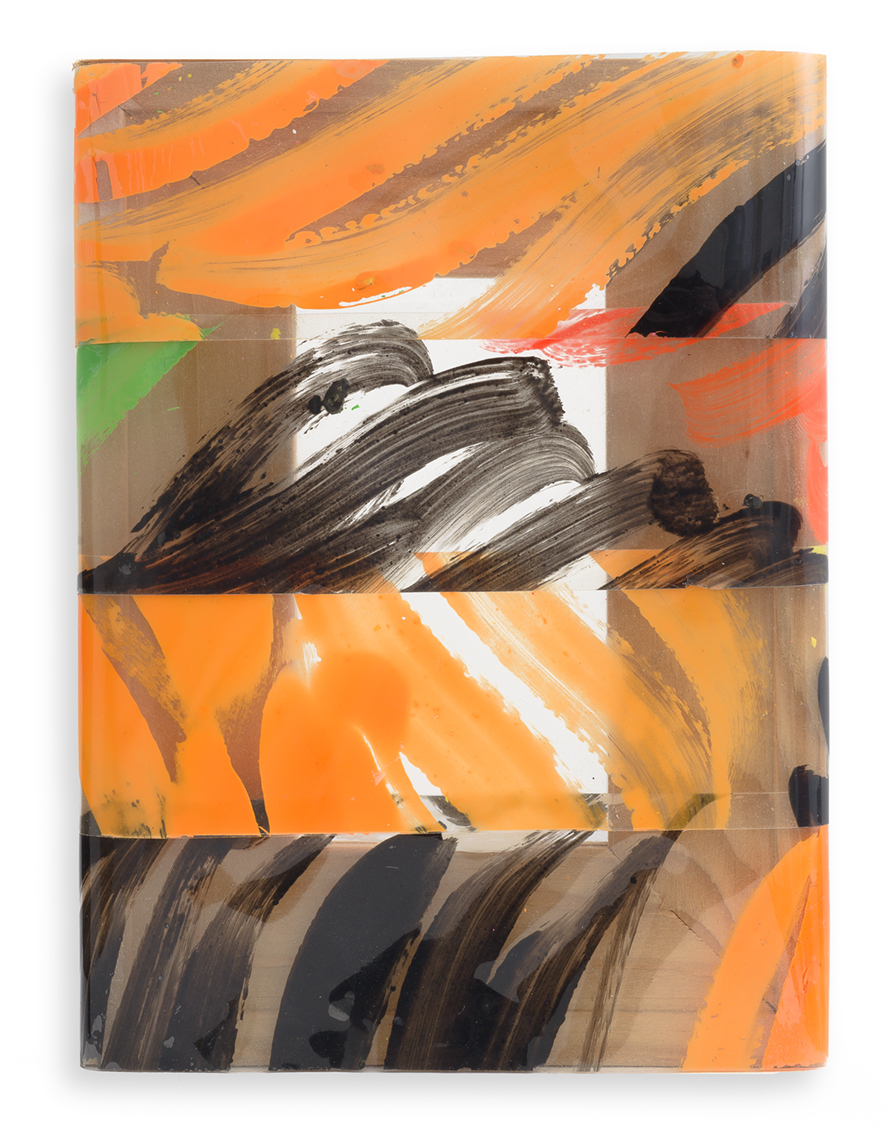
Colori misti
1967 - 2007
Paint on Sicofoil
20 x 15 cm
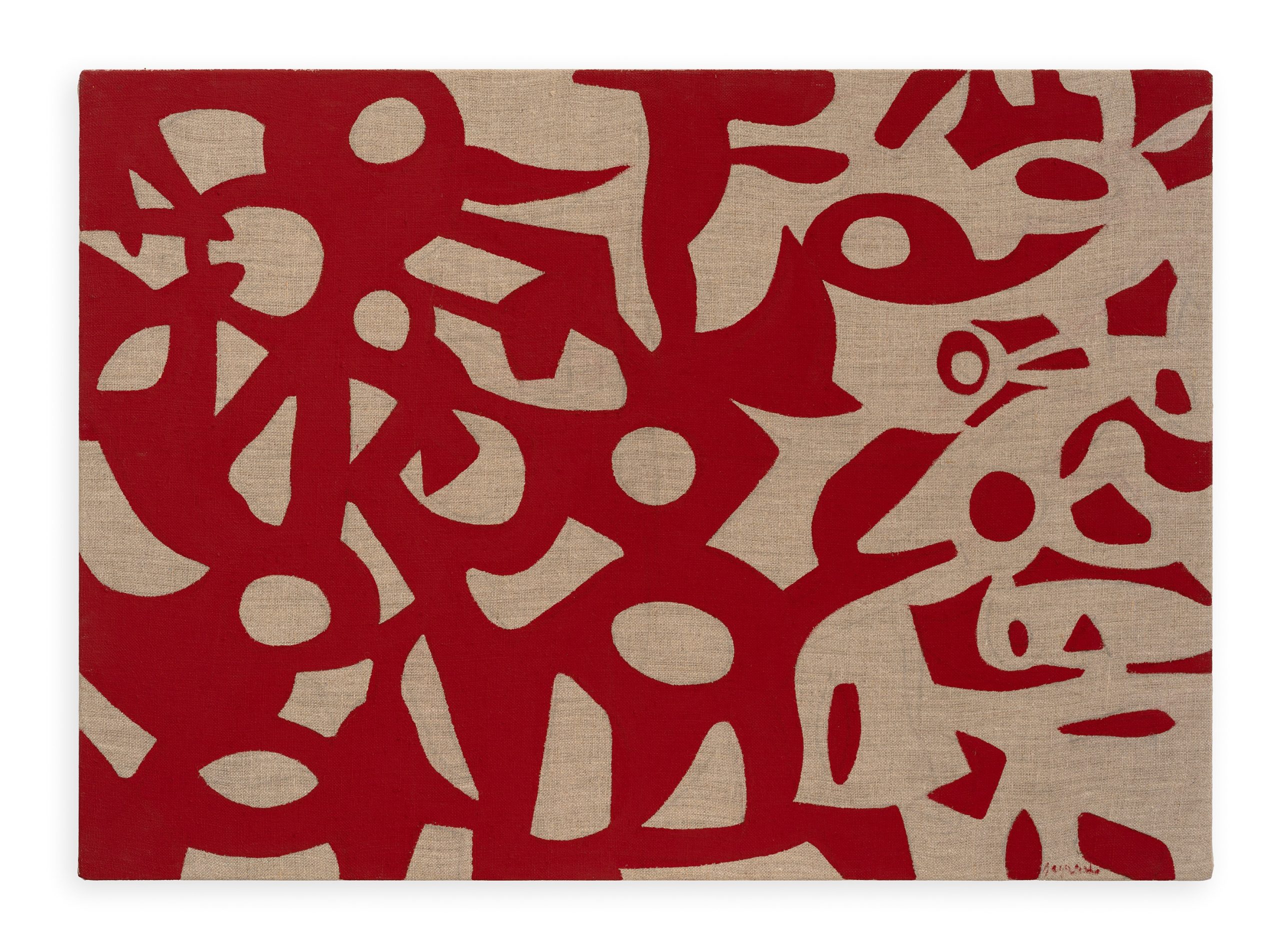
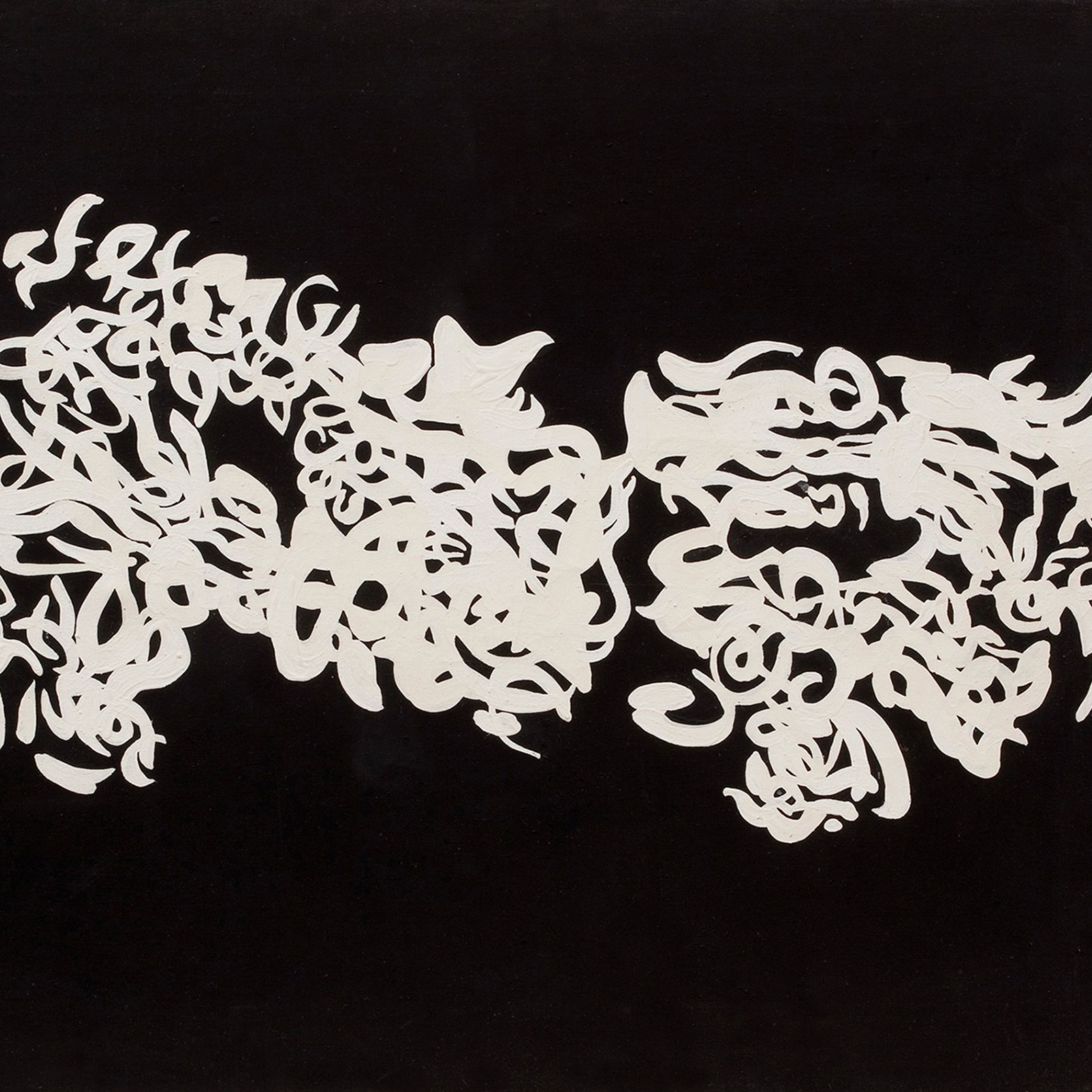
Carminio su tela grezza
1997
Vynil on raw canvas
50 x 70 cm
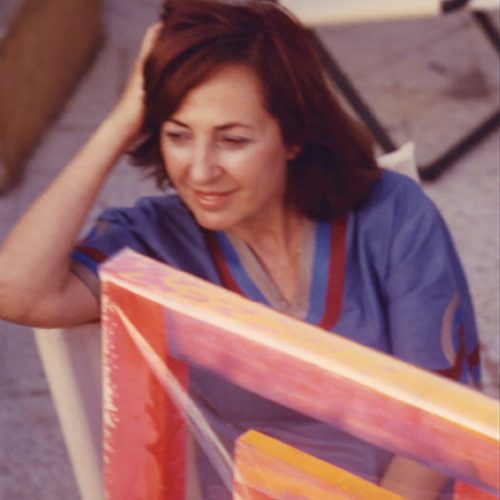
Carla Accardi (1924–2014) was a prominent female figure in 20th-century Italian art. As a feminist and abstractionist, Accardi chose to work with forms that defied easy interpretation. Her paintings challenge preconceptions, such as the association of women with delicacy and painting with compositional beauty. Her art is characterised by linguistic comparisons, balancing rigorous compositions with emotionally charged colours. Accardi fearlessly and experimentally expressed herself at a time when painting was predominantly considered a male domain.
Born in Trapani, Sicily, on October 9, 1924, Accardi studied at the Academies of Fine Arts in Palermo and Florence before moving to Rome in 1946. Pietro Consagra’s studio became her meeting point with a circle of young painters and sculptors, among them Piero Dorazio and her future husband Antonio Sanfilippo: together, in 1947, they launched Forma 1, and she was the only woman to sign its manifesto. Politically on the left, its members argued that a rigorous, non-figurative art could sit fully alongside their Marxist commitment. In 1950 she held her first solo exhibition at the Galleria Age d’Or in Rome.
In the 1950s she developed a painting of interwoven signs, often white on a black ground, which brought her close to Art Informel and into dialogue with other protagonists of Roman abstraction such as Giuseppe Capogrossi. From the early 1960s colour returned to her work, often in fluorescent tones, and traditional canvas gave way to Sicofoil, a clear industrial acetate originally made for packaging. In 1964 she was given a solo room at the Venice Biennale. With Sicofoil, painting became a space to inhabit: she created environments such as Tenda (Tent, 1965–66), conceived in dialogue with the critic Carla Lonzi, Ambiente arancio (Orange Environment, 1966–68) and Triplice tenda (Triple Tent, 1969–71).
In 1970 she founded Rivolta Femminile, one of the first Italian feminist groups, with Carla Lonzi and Elvira Banotti. In the same years she created the Lenzuoli (Sheets), paintings on cotton sheets. When the 1976 Venice Biennale devoted its Ambiente/Arte exhibition to art as a space to be lived in, her transparent rooms were among its protagonists, and the artists of Arte Povera would look to them as a precedent. She returned to the Biennale with a solo room in 1988; in 1996 she was appointed a member of the Brera Academy, and in 1997 she joined the Biennale’s visual arts commission. Her international standing grew further in the early 2000s: in 2001 Triplice tenda was shown at MoMA PS1 in New York, her first solo show in America, and a year later Paris paid tribute with a retrospective at its Musée d’Art Moderne. Carla Accardi died in Rome on February 23, 2014.
Her own words best capture her artistic philosophy:
«Rise to the challenge […] the coexistence of the anthropological and the abstract worlds. Something similar is true also of the support: certain paintings are not painted in their entirety while others are saturated with color all over. Likewise, the sign is at times freer, less controlled, and at others more clearly delineated in its form. Besides, my painting cannot come to a halt on a given problem, presenting it and defining it once and for all. I like to circle around the problem, observing the different and possible solutions to it; I like to be coherent but at the same time to be able to change.»
Carla Accardi in a conversation with Walter Guadagnini, 1989
For information on available original works by Carla Accardi, contact the gallery.