
Lugano
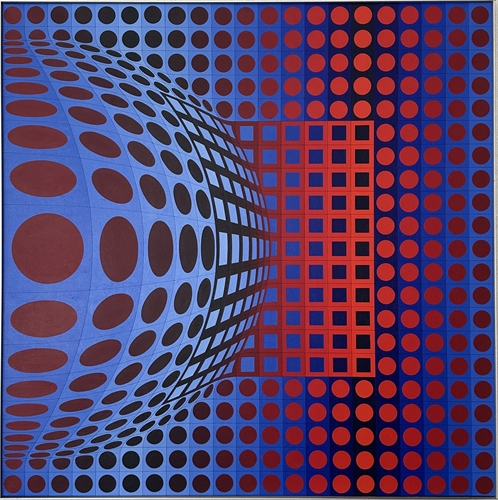
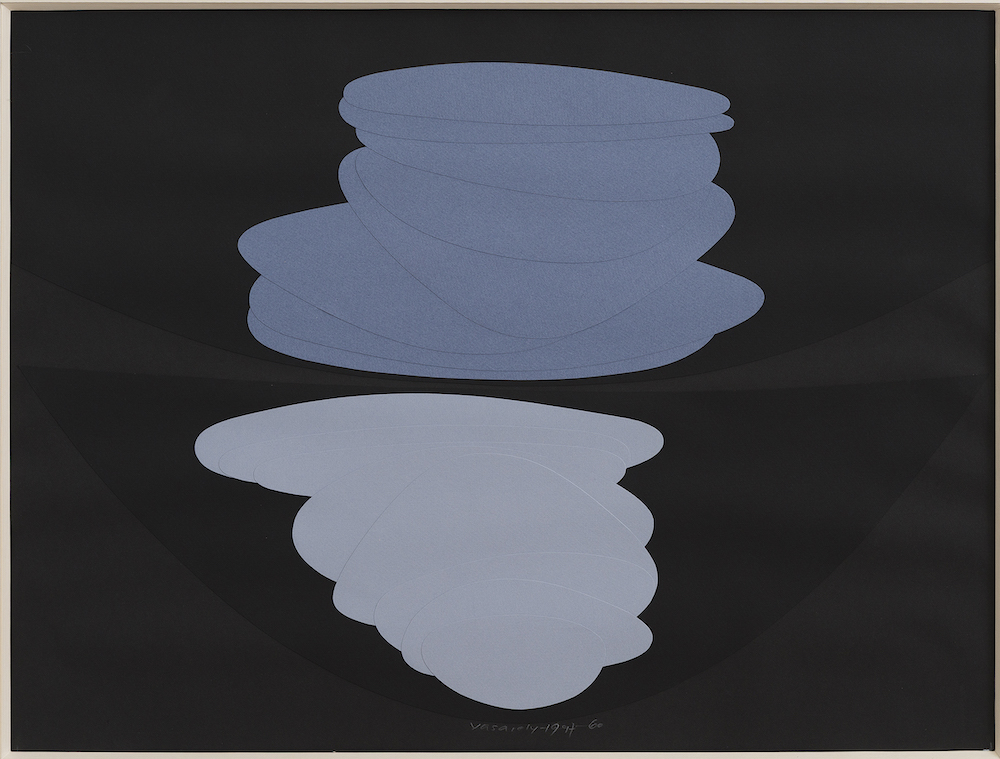
Victor Vasarely is widely regarded as the founder of Op Art: a movement that transformed visual perception and continues to influence art, design, architecture and visual media to this day. Born in 1906 in Pécs, Hungary, Vasarely abandoned his medical studies to pursue a career in art, enrolling at the prestigious Műhely school in Budapest, which specialised in the study of Bauhaus and modernity.
In the 1950s, he developed a ‘plastic alphabet’ — a system of shapes and colours, that could be combined in infinite ways to create optical illusions and dynamic tensions. In works such as Sirius II and the Folklore Planetario series, his interconnected geometric compositions produced visual vibrations that engaged the viewer directly. Vasarely’s work was not confined to painting; his theories integrated art, architecture and the environment. In 1976, he founded the Vasarely Foundation in Aix-en-Provence, a centre for artistic research and experimentation. Following decades of international exhibitions and design projects, he passed away in Paris in 1997, leaving behind a visual legacy that redefined the boundaries between form and perception.
One of his famous observations sums up the ambition of his work: “Art must be understandable to everyone: a universal language of shapes and colours.”