
Lugano
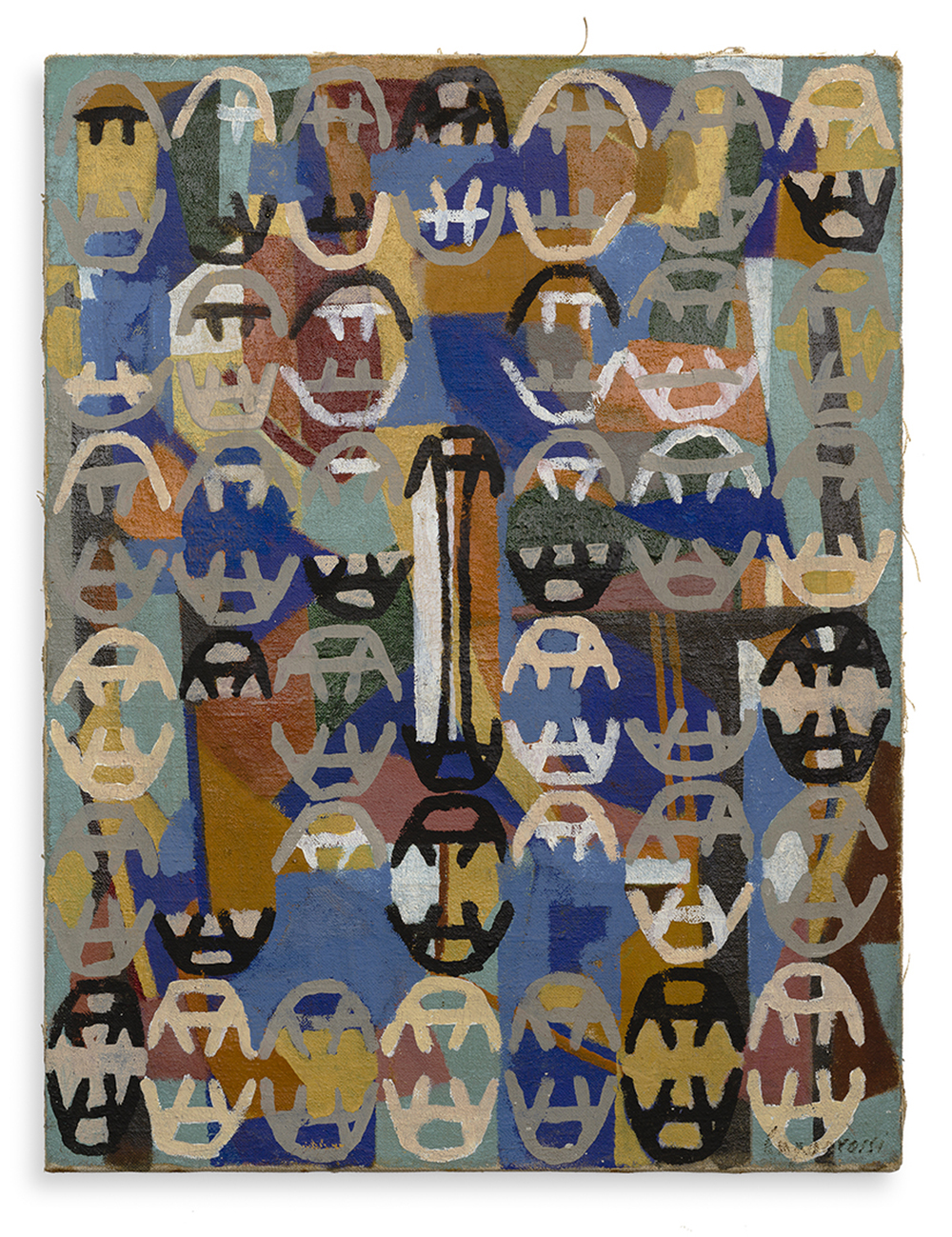
Giuseppe Capogrossi was born in Rome on March 7, 1900. After graduating in law, he definitively chose painting between 1923 and 1926, training under the guidance of Felice Carena. Between 1927 and 1931 he divided his time between Rome and Paris. In 1933 he exhibited with Corrado Cagli and Emanuele Cavalli at the Galleria Il Milione in Milan as the “Group of New Roman Painters”, and signed the Manifesto of Plastic Primordialism with Cavalli and Roberto Melli. During the 1930s he regularly exhibited at the Rome Quadriennale (1931, 1935 and 1939) and the Venice Biennale (1936 and 1948), working in a cultured, tonal figurative style closely associated with the Roman School, as in Il temporale (The Storm, 1933), now in the Galleria Nazionale d’Arte Moderna e Contemporanea in Rome.
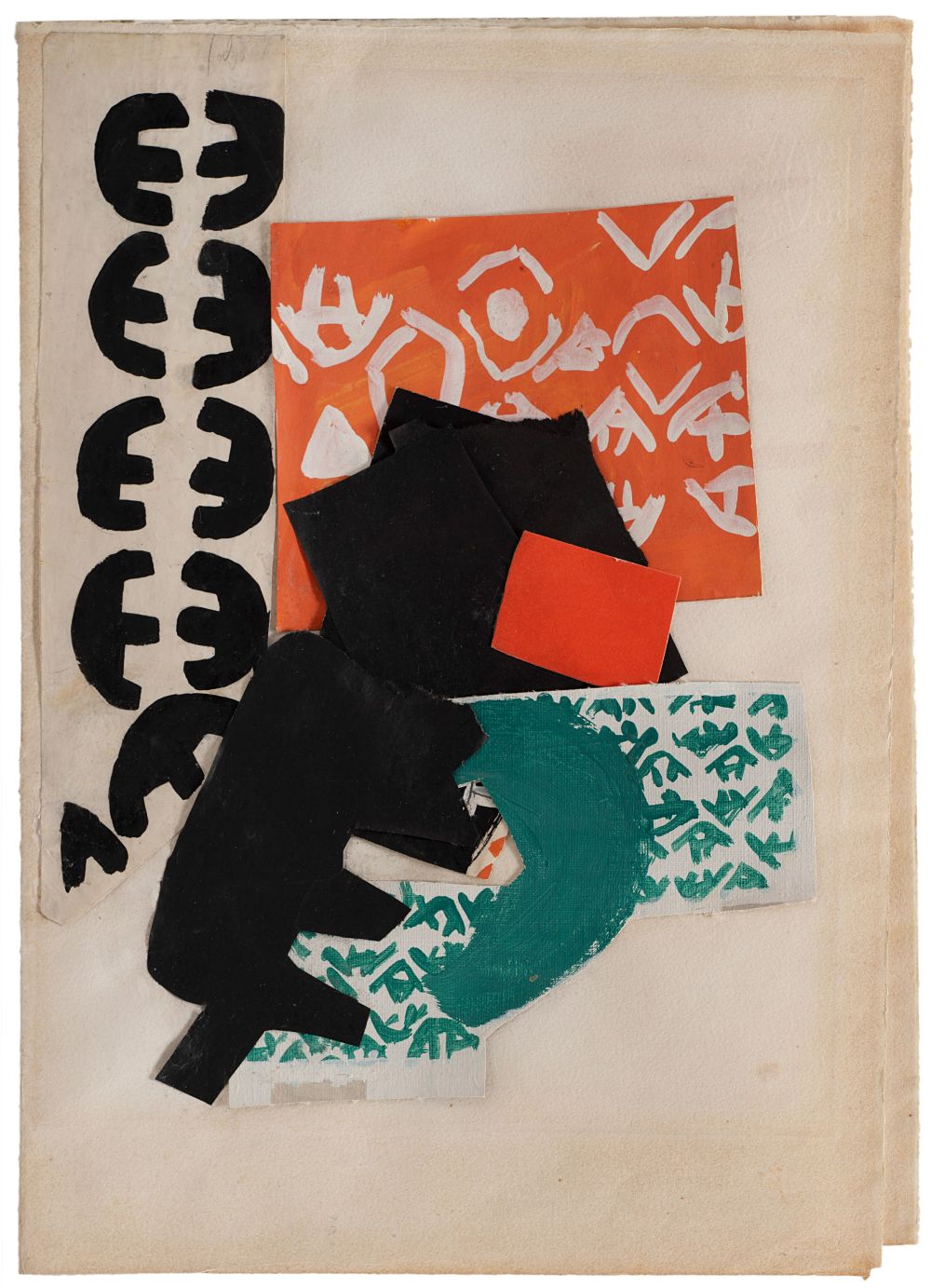
A turning point came in 1949–50. After stays in the Austrian mountains in 1948–49, where Alpine views were beginning to reduce themselves to rhythms and cadences, Capogrossi abandoned all figurative elements in favour of a recurring modular sign, a toothed, fork-like form: a visual alphabet that became the core of his work until his death. This sign is not decoration, but structure: it repeats, expands and organises itself in space like abstract writing, autonomous and necessary. The works of this new period were all titled Superficie (Surface), followed by a number. Capogrossi himself said he had found in that sign “freedom, happiness, the fullness of one’s own being”.
In 1950 he presented his new work at the Galleria del Secolo in Rome, where it met with strong hostility from most critics, and in 1951 he founded the Gruppo Origine with Mario Ballocco, Alberto Burri and Ettore Colla.
In 1954 he was given a room of his own at the Venice Biennale, a decisive step in his recognition. Between 1951 and 1958 he took part in the main international exhibitions of European abstraction, including The New Decade: 22 European Painters and Sculptors at the Museum of Modern Art in New York (1955), establishing himself as a key figure in the transition from lyrical Art Informel to a system-based language of painting. In post-war Rome his work was in dialogue with the young abstract artists of the Forma 1 group, such as Carla Accardi, Piero Dorazio and Antonio Sanfilippo.
Capogrossi died in Rome on October 9, 1972. Together with Lucio Fontana and Alberto Burri, he is considered one of the roots of Italian art in the second half of the twentieth century. His works are held in important public collections, including the Galleria Nazionale d’Arte Moderna e Contemporanea in Rome, which holds the most substantial group of his works in any museum, and the Centre Pompidou in Paris. In 2006 the artist’s heirs established the Fondazione Archivio Capogrossi, which oversees his catalogue raisonné.
The works by Giuseppe Capogrossi currently available at the gallery span the period of the sign: For information on available original works by Capogrossi, contact the gallery.